28 May 2026
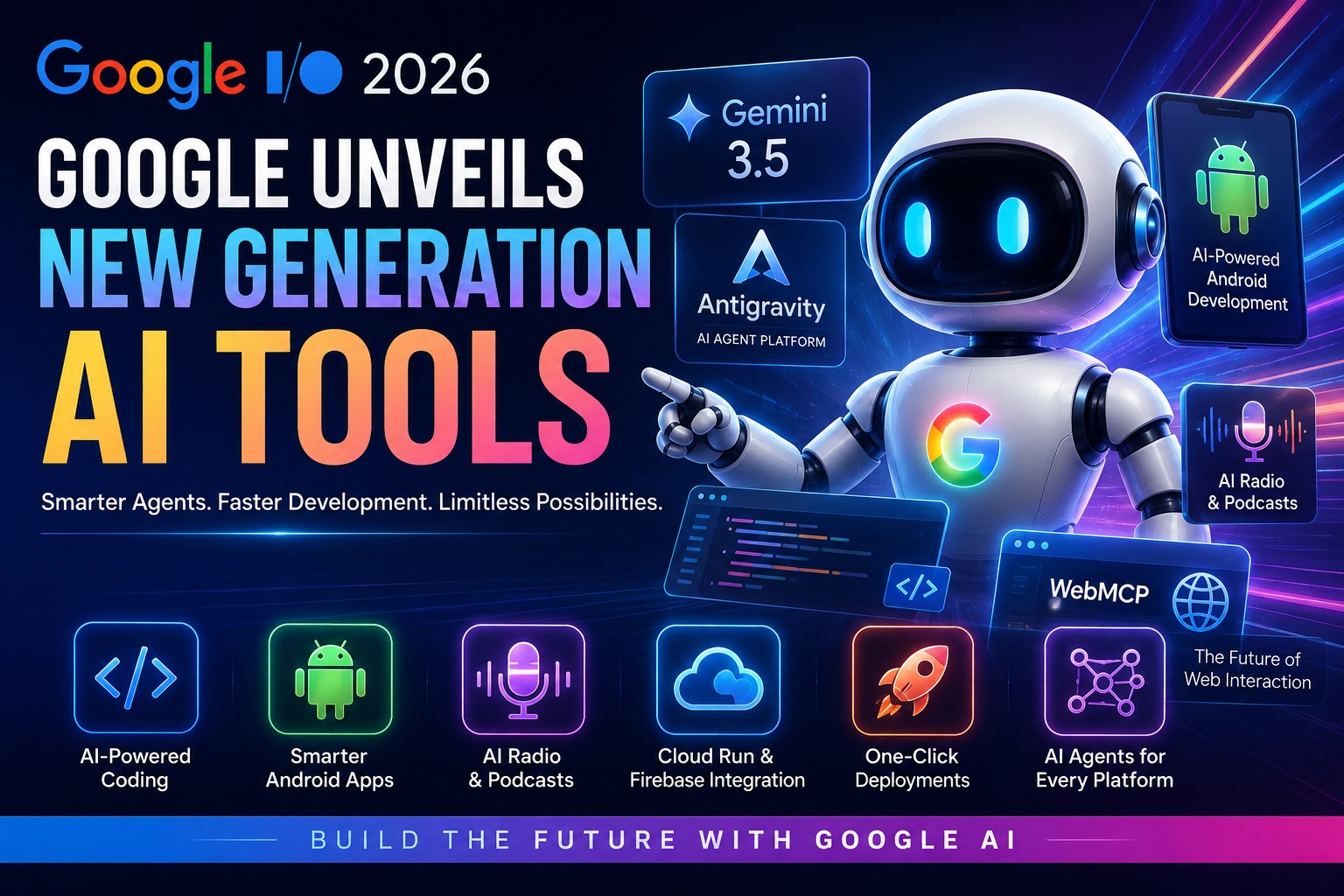
Google Introduces a New Generation of AI Development Tools at Google I/O 2026
At Google I/O 2026, Google revealed a massive wave of AI innovations focused on transforming the way developers create applications, websites, and digital experiences. The event highlighted a future where AI agents are no longer limited to answering questions but are capable of performing real tasks, automating workflows, and helping developers build software much faster.
The company introduced upgraded Gemini models, a completely new agent platform called Antigravity, AI-powered Android development tools, and advanced web technologies designed specifically for the next era of intelligent applications.
Gemini AI Receives Major Upgrades
Google announced several improvements to its Gemini ecosystem, including the release of the Gemini 3.5 model family and its latest Omni AI model.
Another major highlight was Gemma 4, Google’s newest open-source AI model released under the Apache 2.0 license. According to the company, the model gained enormous popularity shortly after launch and quickly became one of Google’s fastest-growing AI projects.
What makes Gemma 4 especially interesting is its ability to run efficiently on devices with limited hardware while still supporting advanced reasoning and intelligent task execution. Google explained that the model is already being tested in robotics systems and space-related environments.
Antigravity Becomes Google’s New AI Agent Platform
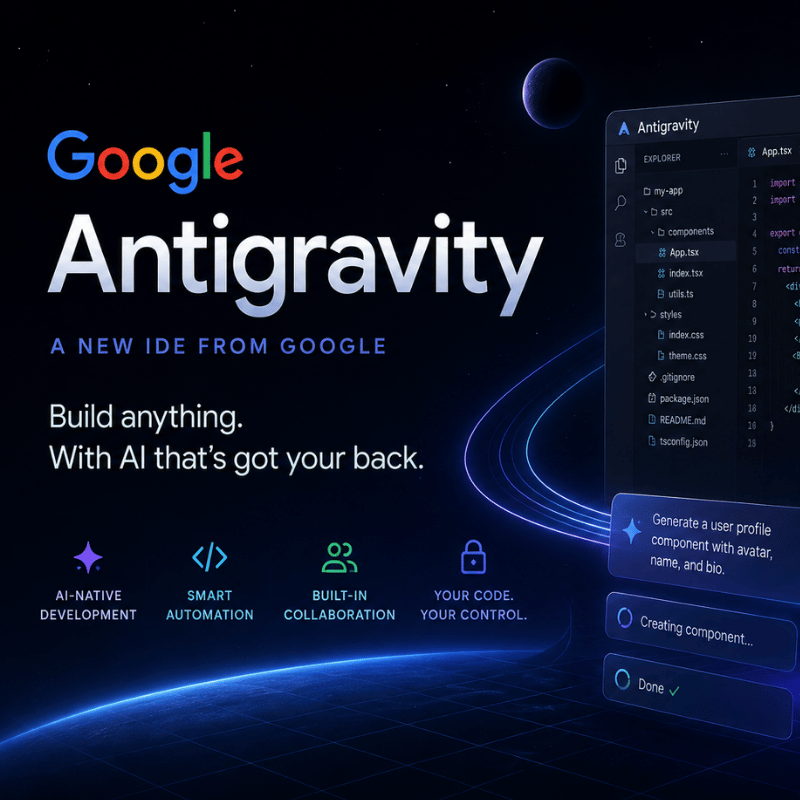
One of the biggest announcements during the event was Antigravity, Google’s new platform built specifically for AI agents.
Unlike standard AI chat systems, Antigravity focuses on autonomous agents that can plan tasks, use tools, analyze information, and complete workflows with minimal human effort.
Google introduced several parts of the ecosystem, including:
- Antigravity SDK
- Antigravity CLI
- Antigravity 2.0 desktop app
- Managed Agents through Gemini API
The platform allows developers to create agents for Android apps, websites, cloud systems, and enterprise environments.
Managed AI Agents Reduce Infrastructure Complexity
Google also launched Managed Agents inside the Gemini API.
With this system, developers can create AI agents using a single API request while Google automatically handles:
- Secure execution environments
- Remote Linux sandboxes
- Scaling infrastructure
- Resource management
This approach removes much of the backend complexity normally required for AI automation systems.
Several early partners are already experimenting with the technology to build customer support systems, coding assistants, and automated design tools.
AI Studio Can Generate Complete Android Apps
Google demonstrated major improvements inside Google AI Studio.
Developers can now build Android applications simply by describing what they want through prompts. The platform automatically generates Kotlin code, prepares app structures, and even allows developers to preview applications directly inside AI Studio.
Some of the newly announced capabilities include:
- Android emulator support
- One-click deployment
- Google Play publishing support
- Cloud Run deployment
- Firebase integration
- Workspace integration
Google also confirmed that developers can create and test Android apps without installing local SDKs or complicated development environments.
AI-Generated Radio Shows and Podcasts
Another interesting showcase involved an AI Talk Radio Agent capable of creating fully generated radio-style content automatically.
The AI workflow can:
- Research online topics
- Write scripts
- Generate multiple AI voices
- Create background music
- Mix audio files
- Design cover artwork
Google demonstrated how a complete podcast episode could be produced through a single workflow powered by AI agents.
This technology could become extremely useful for YouTubers, podcast creators, and digital media companies looking to automate content production.
New AI Features for Web Development
Google also focused heavily on the future of web development.
Modern Web Guidance
A new system designed to help AI coding agents understand the latest web standards and browser-compatible APIs.
WebMCP
Google introduced WebMCP as a new browser communication standard that helps AI agents interact with websites more reliably.
HTML in Canvas
One of the most innovative announcements was the HTML in Canvas API, allowing developers to place real interactive HTML elements directly inside Canvas environments.
This could significantly improve accessibility and interactivity for advanced web applications and browser-based experiences.
Android Development Gets Smarter With AI
Google expanded Antigravity support for Android developers as well.
New AI-assisted Android features include:
- Automated app optimization
- Deep link generation
- Performance tuning
- Smart UI testing
- Android XR support
- AI-powered debugging
The company also previewed a migration tool capable of converting iOS projects into Android applications with far less manual effort.
Gemini AI Comes Directly Into Chrome
Google showcased a future version of Chrome with Gemini deeply integrated into the browser experience.
The system allows AI agents to:
- Interact with websites
- Navigate interfaces
- Configure settings
- Perform automated tasks
- Validate web experiences
Google described this as the beginning of a more intelligent and agent-driven web ecosystem.
Google Launches Global AI Hackathon
To encourage developers to build impactful AI solutions, Google also announced the Build with Gemini XPRIZE Hackathon.
The competition includes millions of dollars in rewards for projects designed to solve meaningful real-world problems using Gemini and Google AI technologies.
Conclusion
Google I/O 2026 showed how quickly software development is changing with AI.
The company is moving beyond traditional chatbots and introducing systems capable of reasoning, planning, coding, testing, and automating entire workflows.
With tools like Gemini, Antigravity, AI Studio, and WebMCP, developers now have access to a new generation of AI-powered platforms that can dramatically speed up application development and digital innovation.
The future of programming is becoming more collaborative, where developers work alongside intelligent AI agents instead of building everything manually.